Thursday, 9 February 2012
Israel and Iran - A Tale of Two Countries
So why all the talk about harsher sanctions against Iran?Here it is important to remember that western hostility to Iran has nothing to de with nuclear weapons. Iran's nuclear programme began while Iran was still ruled by the Shah, that great friend of the west. At that time the west showered Iran with praise and economic deals, including nuclear deals. It was only after the revolution which toppled the Shah and ushered in the Islamic Republic that the west turned against Iran. What the west and the USA in particular dislikes about the current regime in Iran is that it offers a ongoing challenge to western hegemony in the middle east, source of most of our oil.
To bear this out, one only needs to compare the west's treatment of Israel with its treatment of Iran. On the nuclear issue, while Iran clearly has no nuclear weapons and has always denied any nuclear weapons ambitions, Israel does have nuclear weapons. It has had them since the late 1960s and continues to develop them. Israel is the only nuclear power in the middle east, yet the west has conspicuously failed to impose any sanctions on Israel to give up its nuclear weapons. Israel has also failed to sign the Non Proliferation Treaty, while Iran has. This means there are no
IAEC reports on Israel's nuclear weapons programmes. And still no sanctions from the west. The photo at the top of this post shows the latest Jericho 3 missile which provides Israel with nuclear strike capabilities within the entire middle east and Europe.
When it comes to living peacefully with your neighbours there is also a great difference between the two states. Iran has not attacked or invaded any country for at least over a hundred years. It has of course been attacked in that period - think Iraqi war, when the USA and the UK backed Saddam Hussein of all people, but it has not itself attacked anybody. Contrast this with Israel, which has been in a constant state of war with most of its neighbours since its inception. A birth that involved the expulsion of hundreds of thousands of Palestinians from their historic villages and towns. Since then Israel has invaded Lebanon twice or is it three times, Egypt and Jordan at least once and continues to illegally occupy the Golan area, part of Syria. Not to mention the ongoing occupation of East Jerusalem, Gaza and the West Bank. So one country, Israel, has a recent history of invading and occupying the territory of its neighbours, yet is immune from any sanctions or indeed of any kind of pressure whatsoever. While another country with no record of invasion or occupation is the subject of western imposed sanctions and threats of military attack by either Israel or the USA or both.
It would nice if just once in a while our mainstream media and especially our supposedly independent BBC was to properly investigate the double standards on display in out treatment of Israel and Iran.
Friday, 19 June 2009
Elections in Iran and Lebanon
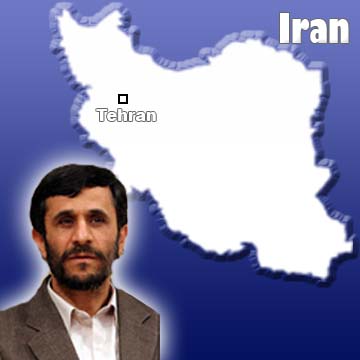
The recent Presidential election in Iran has caused a fair amount of political and media frenzy here in the West. It has also brought out a lot of people onto the streets in Tehran. And good luck to them. People's right to protest should be supported everywhere and if they can bring about some liberalisation of the regime even better. However we should be careful of believing everything the opposition claims.
In the first place all the candidates were “official” candidates in that only candidates approved by the establishment get to run. Real opposition to the Islamic Republic is not allowed. In the second place it is very difficult to get an informed feel for what happened during the election and what is happening now. I don't speak Farsi and wouldn't recognize a Persian word if I saw one. Nor I suspect do the overwhelming majority of Western journalists and so-called experts now pontificating about Iranian public opinion. They all seem to be based in the capital, Tehran and rely on interpreters or on English speaking Iranians. Since by all accounts the driving force behind the main opposition candidate, Mousavi, is the richer and better educated urban voters, then it is not surprising that most of our information comes from opposition sources.
The articles that have been written about the elections have not helped much either. While Moussavi did attract large turnouts of supporters, so did Ahmadinejad. Opinion polling is not an exact science anywhere and least of all in Iran. There is not much of a case that can be proved by reliance on opinion polls. Nevertheless polls that showed Mousavi neck and neck were counterbalanced by polls that showed Ahmadinejad winning by more or less the official margin. And it is a fact that Ahmadinejad did win the 2004 election, defeating Rafsanjani in the run-off election by winning 62% of the vote. It is also worthy of note that in all presidential elections in Iran the sitting president has always won a second term.
Thus it was always a likely outcome that Ahmadinejad would win the election. This does not of course mean that there was no fraud. We simply do not know. And it is really a matter for the Iranians. What is most interesting about the elections is that yet again Western politicians and commentators feel obliged to categorise or rather stereotype the candidates as either “hardline” or “reformist”, which usually goes with “pro-western”. This is nearly always done on the basis of no knowledge whatsoever about the country or the candidates. In Iran for example the attempt to portray Mousavi as some kind of pro-western liberal reformer is so wide of the mark that it beggars belief that it is even tried. This is the same Mousavi who was a very hardline, repressive and anti-western Prime Minister from 1981-1989. The Mousavi campaign is also very closely supported by former President Rafsanjani. In terms of what their campaign was proposing for Iran, here is the view of M K Bhadrakumar, former Indian dimpomat:
“If we are to leave out the largely inconsequential “Gucci crowd” of north Tehran, who no doubt imparted a lot of color, verve and mirth to Mousavi’s campaign, the hardcore of his political platform comprised powerful vested interests who were making a last-ditch attempt to grab power from the Khamenei-led regime. On the one hand, these interest groups were severely opposed to the economic policies under Ahmadinejad, which threatened their control of key sectors such as foreign trade, private education and agriculture.
For those who do not know Iran better, suffice to say that the Rafsanjani family clan owns vast financial empires in Iran, including foreign trade, vast landholdings and the largest network of private universities in Iran. Known as Azad there are 300 branches spread over the country, they are not only money-spinners but could also press into Mousavi’s election campaign an active cadre of student activists numbering some 3 million.”
It is interesting to note that Bhadrakumar's article which appeared in the Online edition of Asia Times, is entitled Rafsanjani's gambit backfires.
It would seem then that Mousavi's great reforms are to make it easier for people like Rafsanjani to make even more money. The inclusion of all these students would also explain the active use of the new media by the Mousavi campaign and their access to the English speaking airwaves. Of course the support of the liberal urban intelligentsia does not necessarily make for an election victory – see John Kerry in 2004. Given that the Rafsanjani clan is widely regarded in Iran as corrupt business dealers and that Ahmadinejad decisively defeated Rafsanjani in 2005, it should not really be a surprise that Mousavi's close association with Rafsanjani would prove to be electorally unpopular.
Once again it must be emphasized that we do not know what actually happened during the election in Iran. Though the protests against the result have continued at least in Tehran. Once again it is difficult to get an accurate picture of what is happening in the provinces. The size and demands of the protests may indicate that we are moving from an internal power struggle within the Islamic regime - Mousavi/Rafsanjani against Ahmadinejad/Kamenei - to a broader struggle for changes to the regime. We just do not know at the moment. However that has never stopped the Western intelligentsia from seeking to interfere. At least it looks like there will be no military attack from the West on Iran. Just the Machiavellian arts of propaganda.
In Lebanon on the other hand we do know what happened in their recent parliamentary elections. Once again the West found it imperative to stereotype the leading coalitions as either pro-western or in this case pro-Iranian. And surprise, surprise the supposedly pro-Iranian bloc, the March 8 Alliance, which included Hezbollah won a clear majority of the popular vote, 55% to the 45% for the pro-western March 14 Alliance. Not that you would know this from the mainstream media. For, due to the quaintness, or profoundly undemocratic nature of the Lebanese electoral system, the March 14 Alliance, which remember lost the popular vote, won 71 of the 128 seats in the Parliament. Where were the cries of outrage at this blatant subversion of the popular will? Conspicuous by their absence. Instead we in the West were treated to a chorus of reports on how successful the pro-western bloc had been and how Hezbollah had suffered a major reverse.Lebanon remains a country dominated by religious affiliation. The current deal allocates half the Parliamentary seats to Christians and the other half to Muslims. Unfortunately from a democratic perspective all the evidence shows that only about 35-40% of the population is Christian. Within in the Christian community each sect is allocated its own seat or seats. Thus the Protestants have one seat allocated to them, while the Armenian Orthodox get five seats and the Greek Catholics get eight seats. The big losers in this game are the Shia Muslims who by most accounts represent nearly 40% of the population. Historically the poorest segment of Lebanese society, the Shia are allocated a mere 27 seats in Parliament, approximately 21% of the seats. Now it is a matter for the Lebanese to determine their own electoral system. I just don't see why our leaders in the West should be so loud in their praise for a system that so blatantly discriminates against the largest group in the country.
A closer look at the make-up of the March 14 Alliance also calls into question just to what extent they are in fact liberals worthy of our support. The leading component is the main Sunni party the Future Party. It's current leader is Saad Hariri who is the son of the previous leader Rafik Hariri. This party is also closely allied to Saudi Arabia, not exactly a beacon of civil liberties. Another key party is the main Druze party which goes by the exotic name of Progressive Socialist Party. Its leader is Walid Jumblatt and its previous leader – yes you've guessed, his father, Kemal Jumblatt. The use of the word Socialist in the party's name seems to owe more to the father's love of Orwell than to any belief in anything remotely socialist. Unless Tony Blair still counts as a socialist. The other mainstay of the March 14 Alliance are the two blocs of Maronite Christians. Both are very right wing and one is modelled on the Falangists of Franco's Spain. Again not exactly what you would expect from a pro-western party.
And yet that is the norm in the Middle East. The so-called moderates and our friends in that region all seem to be corrupt dynastic dictatorships – Egypt, Saudi Arabia, Jordan and the various mini states in the Gulf. The plural nature of Lebanon has prevented a similar dictatorship from emerging, though not without successive attempts by the Maronite minority. However the dynastic principle is still alive and well. Throughout the region the only parties that seem to be free from this dynastic corruption are Hezbollah in the Lebanon and Hamas in Palestine. They of course, like Iran itself are regarded as hors jeu because they are unwilling to accept their allocated role as Western stooges.
Saturday, 6 June 2009
Who's afraid of a nuclear Iran?
Hardly a week goes by without the appearance of some “news” story about how close Iran is to developing nuclear weapons. This “news” is usually conveyed in a way to make it clear that were Iran to acquire nuclear weapons, this would be a very, very bad thing indeed. Stories about Iran's alleged nuclear weapons programme are so frequent that is has almost become accepted wisdom in the west that Iran does indeed have such a programme. Iran has of course always denied that it is trying to develop nuclear weapons and despite the best efforts of Israel and the neo-cons in the USA, there is no evidence that Iran has a nuclear weapons programme. However let us leave that aside as I want to focus on why the default position of just about everyone who opines about this matter is that Iran must not under any circumstance be allowed to have nuclear weapons. What is so frightening about a nuclear Iran?
In the first place it cannot be stated often enough that the mere possession of weapons, whether nuclear or not, does not equal intent to use said weapons. Otherwise, given the size of the nuclear and non nuclear arsenals of both the USA and the USSR during the cold war, the world would surely be at an end. We in the UK are the proud owners of our own nuclear weapons, not to mention a fair sized military, yet we claim we are not a threat to anyone. So, why the fear of a nuclear Iran?
There are it seems to me, two main reasons for this. The main one is the insistent campaign from Israel to portray Iran as a mortal and existential threat to the very survival of Israel. In this Israel has had the unwavering support, as usual of the USA, which for its own reasons has pursued an anti Iran policy ever since the creation of the Islamic Republic. In the case of the USA, the Islamic Republic of Iran represents a direct challenge to US hegemony in the Middle East. For this reason the USA has thwarted Iranian membership of the World Trade Organization, named Iran as part of an axis of evil and pursued a policy of regime change in Iran. And despite the nice words from Obama, his administration has not as yet changed policy towards Iran.
Israeli fear of Iran seems strange and overblown. Overblown is certainly is, for why would Iran attack Israel? In fact how could it attack Israel? With no common border, Iran lacks any of the necessary military means to mount an airborne or naval attack on Israel. Everyone with even a rudimentary knowledge of geography and weapons knows this. Even if Iran were to develop nuclear weapons this would change nothing. Any attack on Israel would not only bring about the unleashing of Israel's own nuclear weapons, but also the full might of the USA, leading to the almost certain obliteration of Iran. But this has nothing to do with reality. Israel needs an enemy, a bogeyman with whom to scare its own citizens and above all to scare the rest of the world into supporting poor little peace loving Israel, permanently under threat from powerful neighbours. This is nothing more than the continuation of the Jew as victim narrative so dear to Zionists. Previously Iraq, under Saddam Hussein, used to serve as the threatening bogeyman. Now that Iraq is a model democracy and under American occupation, it can no longer fulfil that role. A new bogeyman was needed and Iran fits the bill quite nicely. Already regarded as a hostile enemy by the Americans, and now with a populist President, every willing to utter a bellicose quote or two, Iran is perfect as the existential threat to Israel. Faced with such a threat to its very survival how can Israel be expected to make any kind of accommodation with the Palestinians, who as everyone knows are just the mere stooges of the Iranians. The Israeli aim is to get the world and in particular the Americans to focus on the alleged dangers of an alleged nuclear Iran in order to stave off any international pressure on Israel to face up to its responsibilities towards the Palestinians.
Where does the UK and the rest of the world fit into this picture? If Iran were to acquire a nuclear capacity, this would upset or more likely overthrow the current world order re nuclear weapons. If Iran can get away with developing a nuclear arsenal, then who would be next? Saudi Arabia? Turkey? Brazil? Japan? Such a prospect is widely regarded as unwelcome and to be avoided if at all possible. For the UK and France, a nuclear Iran poses another direct challenge to their pretensions as great powers with permanent seats and vetoes on the UN Security Council.
In all the media froth about a nuclear Iran, little is ever written about what is the point of having nuclear weapons. It is just assumed that our nuclear arsenal is a deterrent, and as such a good thing to have. Of course if it is such a useful thing to have as a deterrent, then it is hard to see why Iran should be denied this benefit. After all the Iranians have not invaded or attacked anybody for some 200 hundred years or more. On the other hand in the last 50 years or so they have been invaded by Saddam's Iraq, egged on and supported by the USA and the UK, subjected to US and UK involvement in the overthrowing of a democratically elected government in the 1950s, this leading to the dictatorship of the Shah. And Iran is still regarded as a hostile regime by the USA. If you were an Iranian would you not want the security that a nuclear deterrent would provide?
The other beneficial (from a UK perspective) aspect of the discussion about Iran's alleged nuclear weapons is that it deflects attention away from the destructive power of non nuclear weapons. Apart from the two atomic bombs dropped by the USA at the tail end of the Second World War, nuclear weapons have not been used. But the carnage has continued, year by year. Millions and millions of people get killed and maimed, but so long as no nuclear weapons are involved, it doesn't seem to matter too much. Leaving aside the carnage from the Second World War, in the last few years we have seen horrific violence caused by the US and UK led invasions and occupations of Iraq and Afghanistan, with in both cases increasing numbers of civilian casualties. And of course in December and January the Orwellian named Israel Defence Force ( the most moral army in the world) managed to slaughter some 1400 Palestinians in Gaza, the overwhelming majority of whom were civilians, including women and children. And all without the benefit of nuclear weapons. Now if the Palestinians had their own nuclear deterrent?