Saturday, 6 June 2009

Who's afraid of a nuclear Iran?


Hardly a week goes by without the appearance of some “news” story about how close Iran is to developing nuclear weapons. This “news” is usually conveyed in a way to make it clear that were Iran to acquire nuclear weapons, this would be a very, very bad thing indeed. Stories about Iran's alleged nuclear weapons programme are so frequent that is has almost become accepted wisdom in the west that Iran does indeed have such a programme. Iran has of course always denied that it is trying to develop nuclear weapons and despite the best efforts of Israel and the neo-cons in the USA, there is no evidence that Iran has a nuclear weapons programme. However let us leave that aside as I want to focus on why the default position of just about everyone who opines about this matter is that Iran must not under any circumstance be allowed to have nuclear weapons. What is so frightening about a nuclear Iran?

In the first place it cannot be stated often enough that the mere possession of weapons, whether nuclear or not, does not equal intent to use said weapons. Otherwise, given the size of the nuclear and non nuclear arsenals of both the USA and the USSR during the cold war, the world would surely be at an end. We in the UK are the proud owners of our own nuclear weapons, not to mention a fair sized military, yet we claim we are not a threat to anyone. So, why the fear of a nuclear Iran?

There are it seems to me, two main reasons for this. The main one is the insistent campaign from Israel to portray Iran as a mortal and existential threat to the very survival of Israel. In this Israel has had the unwavering support, as usual of the USA, which for its own reasons has pursued an anti Iran policy ever since the creation of the Islamic Republic. In the case of the USA, the Islamic Republic of Iran represents a direct challenge to US hegemony in the Middle East. For this reason the USA has thwarted Iranian membership of the World Trade Organization, named Iran as part of an axis of evil and pursued a policy of regime change in Iran. And despite the nice words from Obama, his administration has not as yet changed policy towards Iran.

Israeli fear of Iran seems strange and overblown. Overblown is certainly is, for why would Iran attack Israel? In fact how could it attack Israel? With no common border, Iran lacks any of the necessary military means to mount an airborne or naval attack on Israel. Everyone with even a rudimentary knowledge of geography and weapons knows this. Even if Iran were to develop nuclear weapons this would change nothing. Any attack on Israel would not only bring about the unleashing of Israel's own nuclear weapons, but also the full might of the USA, leading to the almost certain obliteration of Iran. But this has nothing to do with reality. Israel needs an enemy, a bogeyman with whom to scare its own citizens and above all to scare the rest of the world into supporting poor little peace loving Israel, permanently under threat from powerful neighbours. This is nothing more than the continuation of the Jew as victim narrative so dear to Zionists. Previously Iraq, under Saddam Hussein, used to serve as the threatening bogeyman. Now that Iraq is a model democracy and under American occupation, it can no longer fulfil that role. A new bogeyman was needed and Iran fits the bill quite nicely. Already regarded as a hostile enemy by the Americans, and now with a populist President, every willing to utter a bellicose quote or two, Iran is perfect as the existential threat to Israel. Faced with such a threat to its very survival how can Israel be expected to make any kind of accommodation with the Palestinians, who as everyone knows are just the mere stooges of the Iranians. The Israeli aim is to get the world and in particular the Americans to focus on the alleged dangers of an alleged nuclear Iran in order to stave off any international pressure on Israel to face up to its responsibilities towards the Palestinians.

Where does the UK and the rest of the world fit into this picture? If Iran were to acquire a nuclear capacity, this would upset or more likely overthrow the current world order re nuclear weapons. If Iran can get away with developing a nuclear arsenal, then who would be next? Saudi Arabia? Turkey? Brazil? Japan? Such a prospect is widely regarded as unwelcome and to be avoided if at all possible. For the UK and France, a nuclear Iran poses another direct challenge to their pretensions as great powers with permanent seats and vetoes on the UN Security Council.

In all the media froth about a nuclear Iran, little is ever written about what is the point of having nuclear weapons. It is just assumed that our nuclear arsenal is a deterrent, and as such a good thing to have. Of course if it is such a useful thing to have as a deterrent, then it is hard to see why Iran should be denied this benefit. After all the Iranians have not invaded or attacked anybody for some 200 hundred years or more. On the other hand in the last 50 years or so they have been invaded by Saddam's Iraq, egged on and supported by the USA and the UK, subjected to US and UK involvement in the overthrowing of a democratically elected government in the 1950s, this leading to the dictatorship of the Shah. And Iran is still regarded as a hostile regime by the USA. If you were an Iranian would you not want the security that a nuclear deterrent would provide?

The other beneficial (from a UK perspective) aspect of the discussion about Iran's alleged nuclear weapons is that it deflects attention away from the destructive power of non nuclear weapons. Apart from the two atomic bombs dropped by the USA at the tail end of the Second World War, nuclear weapons have not been used. But the carnage has continued, year by year. Millions and millions of people get killed and maimed, but so long as no nuclear weapons are involved, it doesn't seem to matter too much. Leaving aside the carnage from the Second World War, in the last few years we have seen horrific violence caused by the US and UK led invasions and occupations of Iraq and Afghanistan, with in both cases increasing numbers of civilian casualties. And of course in December and January the Orwellian named Israel Defence Force ( the most moral army in the world) managed to slaughter some 1400 Palestinians in Gaza, the overwhelming majority of whom were civilians, including women and children. And all without the benefit of nuclear weapons. Now if the Palestinians had their own nuclear deterrent?

Tuesday, 2 June 2009

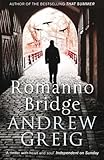
The Return of John Macnab and Romanno Bridge


Andrew Greig's novel was the reading group's book for June. I knew that this was a modern day follow-up or reworking of a John Buchan novel entitled simply John Macnab. However not having read the original, I had no idea what to expect. The first surprise is that there is no John Macnab as such. Instead we have three middle aged friends – Neil, Murray and Alasdair - who have decided to embark on a series of daring escapades in the Highlands of Scotland. The escapades take the form of a wager which involves relieving three Highland estates of a salmon or a brace of grouse or a deer. The challenge is published in the Scotsman and is the same challenge as in John Buchan's novel. In order to hide their real identities the three conspirators use the name John Macnab as a sort of nom de plume.

The story then develops much like an old fashioned rip-roaring adventure yarn, with lots of daring-do, obstacles to overcome and cunning and potentially violent adversaries to outwit. There is a distinct feel of Enid Blyton's Famous Five about the novel, though with the added ingredients of sex, drugs and rock 'n roll with copious amounts of booze thrown in for good measure. The three adventurers all have a past which gradually emerges as the tale develops. This allows Greig to present his characters as real people and not merely stock figures. In their quest they are soon joined by the beautiful and feisty Kirsty, who has her own past demons to confront. Their adversaries are also presented as interesting people in their own right, especially the local policeman, Jim MacIver and the somewhat mysterious Ellen Stobo, sent up from London to find out what is really going on. As two of the estates are foreign owned and the third is HM's very own Balmoral there is plenty of scope for discussion about privilege, land ownership and access, not to mention adding a bit of colour and mystery to the tale.

This is a cracking good tale and a thoroughly enjoyable read. Fast paced and written with a light touch you are kept in suspense right up to the last page. Part of this suspense is provided by the uncertainty over the identity of the narrator. It is never clear, until the very end, just who has written the tale. The very first sentence – “Begin the afternoon in August when an old blue Ford Escort quietly enters a small Highland town.” - creates an atmosphere of uncertainty and mystery. Every so often the narrator includes references to the future, one of them about what some minor character will do seventy years on, when even the narrator will be dead. This air of uncertainty as to the status of the tale and its narrator is continued right to the end. The last chapter begins by repeating a line uttered by one of the characters earlier in the tale: “Everything I have told you is true. You must decide whether to believe that or not.”

Romanno Bridge

This is Andrew Greig's follow-up book to The Return of John Macnab. And another cracking good adventure yarn it is too. Featuring the same cast from John Macnab with a few newcomers thrown in for good measure. Two major differences though, one relatively minor – the main focus is Kirsty – it appears to be her story. The other really significant difference is that this book is much darker and violent with an ever rising count of murders to rival Taggart.

The possibility of a follow-up is hinted at in the last chapter of John Macnab, especially the last few pages, when Neil meets up with Kirsty again. Interestingly the new book does not begin with this. Instead the first third of the book is all about Kirsty and her new life in Dumfries as she starts afresh after the excitement of John Macnab's adventures. This is when she makes the acquaintance of Billy Mackie, a retired stonemason who tells her a strange tale about the Stone of Destiny. Hooked, she starts to make enquiries and soon the new adventure begins. For Romanno Bridge is about the true tale surrounding the mystery of the Stone of Destiny, or should that be the Stones of Destiny? Quite a few stones appear in this tale as well as rings with hidden messages.

Kirsty does meet up with Neil again and the account is pretty much the same as in the ending of John Macnab, with the key difference that this time it is told in the third person, by the unknown narrator. Once again there is a bit of a mystery as to who this narrator is. By then we have met most of the new characters including Leo, the youngish Kiwi working in the Samye Ling Buddhist monastery and most spectacularly, Mr Adamson, the cold blooded and very violent villain of the piece. The other key newcomer – Inga Johanssen from Norway - has been mentioned but does not appear until later.

As with John Macnab this is an excellent adventure tale, well written and fast paced. Greig has a lovely way with words, which enlivens the book and takes it beyond mere adventure. Here is an example of a cheeky use of metaphor. Leo the Kiwi is thinking about the challenges of life:- “For sure it is a threatening and uncertain world. Don't complain, mate – do something or get used to it: his dad's mantra. He didn't do metaphors, the old fella. He didn't beat about the bush.”

In the main Romanno Bridge features much of the same mix as before – a bit more sex and drugs and still quite a lot of booze. There is more busking than Rock 'n Roll this time. What makes it very different though is that this time the world is a much darker place. Real suffering occurs and a lot of people die, usually very unpleasantly. This may have something to do with the fact that though the action starts immediately after the end of John Macnab, Romanno Bridge wasn't written until 2008 and the darker ambience probably reflects the changes that have taken place in the world over the previous 12 years.

Friday, 29 May 2009

More Stitching

My canvas work has continued more or less unabated over the last few weeks. I finally managed to finish the Bargello pattern I was working on. Here it is.

I am still not sure what to do with it now. My original idea was to make a loose frame, at least on the sides, using driftwood, so it could hang on a wall. Unfortunately I have not yet found suitable pieces of wood – not that I have tried very hard. Will need to go on more beach walks.

However I have completed my other project. This was to make sleeve covers with a stitched insert, for notebooks for my daughters Emma and Elena. I ended up doing three as one of Emma's pals, Arlene, wanted one too. The inserts were done on 18 count Aida fabric, using two strands of DMC cotton thread. Here are the inserts on their own.


The next stage and the more difficult one was to work out how to get them into a book jacket. For this I consulted an old, or rather long established friend, Gill, for advice. Gill was a book binder, before she retired, so I reckoned she would know what to do. As indeed she did. She also very kindly gave me three sheets of buckram cloth for the jackets. Making a book cover was not as easy as Gill made it sound, though I did manage in the end. Not exactly fine art, they will serve their purpose. Here are the finished notebooks.


Now that I have started a new career as a book binder, or at least, a maker of shoddy book jackets, I may well continue as I am now the proud owner of a rotary cutter, a cutting mat and a metal ruler. Need to put them to regular use. My next stitching project though is to make door plates for my three grandsons. Again the idea is use driftwood and glue the stitched canvas on to it. Really must get out on the beaches soon.

Wednesday, 27 May 2009

Reforming the UK Parliament

The recent disclosures about MPs' expenses and the resulting public wrath has forced our political leaders to come up with some suggestions for reforming not just the allowances but for reforming how Parliament as a whole works. Everyone seems to be getting in on the act and suggestions have included reducing the number of MPs, fixed term Parliaments, giving Parliament more power and so on. As they say up here, I hae me doubts. I am sure that some minor reforms will be enacted, especially covering MPs' expenses, but most of the proposals amount to little more than rearranging the deck chairs on the Titanic. To bring about change requires a Parliamentary majority and if you have one, you are less inclined to use it to reduce your powers. As a general rule, turkeys are not known for voting for Christmas.

I do not want to go into great detail about the full range of possible reforms, but rather focus on two issues that any substantial reform needs to address – namely disentangling Parliament from the government of the day and the need for a written constitution. Many of the problems and weaknesses of the current set-up stem from the lack of clarity about the roles of Parliament and the government. Many commentators use the terms interchangeably, which is understandable since the two are so closely entwined. In the UK there is no formal separation of powers. Indeed the Crown, in the person of the Queen, is a key part of both Parliament and government. If you go to the Parliament's own web page you will discover that Parliament is made up of the House of Commons, House of Lords and the Queen. All governments make regular use of the Royal prerogative to rule without Parliamentary scrutiny and of course use this prerogative to make treaties, go to war, dissolve Parliament, award honours etc. The government itself is of course Her Majesty's government and not the people's government. It is a lousy system and needs to go.

Government

Governments need to be separate and distinct from Parliament. Though this at first sight seems akin to awarding an undeserved prize to the government, this is not in fact so. As we will see the main reason for this separation is to make Parliament more powerful. The counterpart to this is the need to place clear limits on what a government can and cannot do. No more Royal prerogative. The other benefit is that this reform would come with a fixed term for the election of a government. Most countries opt for four year terms, though the Scandinavian countries manage with three year terms without descending into chaos. From the government's perspective the reform means that a government is, barring some really, really serious scandal, guaranteed a full term without having to worry about Parliamentary revolts and votes of no confidence. Any legislation and all financial matters will still require Parliamentary approval, but failure to pass a bill would just mean that the particular bill had failed, it would not threaten the survival of the government.

Essential to this proposed reform is how the government is elected. In essence the country would be asked to elect a Prime Minister, who without the need for Royal approval would form and lead the government. Ministers need not come from Parliament, but Parliamentary approval may be required. To minimise the election of a Prime Minister on a very low percentage of the popular vote it would necessary to move away from the simple first pat the post system currently in use for the UK Parliament. One option would be have a second ballot, as they do in France, if none of the candidates won over 50% of the vote. This second ballot, usually a fortnight later, is between the two leading candidates from the first round of voting. The benefit of this system is that in order to win the second round of voting, candidates have to appeal beyond their core support. They may even offer a formal or semi formal deal to other parties. The result is that whoever does win has to have won the endorsement of at least some other voters. The use of a second ballot makes it clear who the final the choice is between, but a similar outcome can be achieved without recourse to a second round of voting, by using the Single Transferable Vote (STV). All is then decided on the one day of voting. Whatever system is used it is important to have a voting system that encourages potential Prime Ministers to reach out for the widest possible support and not just rely on winning power with a minority of the votes.

Parliament

With the government a separate and distinct institution, Parliament can regain its prime role of 1) passing, after due scrutiny, new legislation; 2) agreeing to or rejecting the government's requests for money and 3) holding the government to account by questioning and probing the actions and activities of the government – this would include decisions about treaties and going to war. The benefits would seem to be obvious. No longer dependent on the government, Parliament can set its own priorities, this would include the power to initiate legislation, which would cease to be something only the government can do, as at present. Parliament can reject any proposal from the government, knowing that it will not bring the government down. This means that all legislation and proposals should be considered on their merits and not on how they might affect the government's standing and prestige. Parliament would have control over its own resources which can be used to staff and support the various select and standing committees who would then have the power and resources to adequately challenge the government. This opens the way to better scrutiny of the government and in turn should lead to better and more effective legislation. Becoming a MP would be an important, powerful and worthwhile career in its own right. MPs would no longer be seen as mere lobby fodder or future government ministers. Members of Parliamentary committees would have as much say in future legislation as ministers in the government. As part of this reform the Royal prerogative would go. All government actions would require Parliamentary approval.

A further benefit of these two reforms is that as government ministers are no longer in Parliament, there is no need for such a bloated institution. There are currently 647MPs, far too many. A reformed Parliament could easily make do with around 400 MPs. This reduction in numbers would make it politically easier to raise the pay of MPs, so that, apart from providing accommodation for those MPs who stay far from Westminster, there would be no need for any allowances whatsoever. Parliament is an extremely important part of our democracy and we should ensure that our MPs are well paid and then let them get on with buying or not buying whatever they want.

For Parliament to act in this way, electoral reform is also necessary. If we continue with first part the post, then the government would still normally have a majority in Parliament and thus less subject to genuine scrutiny and challenge. To become an effective and representative body, Parliament needs to be elected by a form of proportional representation. The exact form is less important than the necessity for the outcome of the election to ensure the greatest degree of proportionality as possible. It is only worthwhile pointing out that the much touted Alternative Vote (AV) is not in any way a system of proportional representation. AV makes such little difference to the overall outcome of an election that it is not worth even considering.

Written Constitution

This is another essential part of the reform package. If these or any other package of reforms is to work then they need to protected from the power of one Parliament to simply overturn what a previous one has done. Changes to the way our democracy works should be meant to last. This can only be assured by writing them down in a constitution which would also include the procedures by which the constitution can be changed in the future.

The overall result of the above reforms is to put limits on the powers of governments and to correspondingly increase the powers of Parliament, while reducing the number of MPs. This proposal therefore suffers from the almost certainly fatal flaw that there are too many losers. And as the biggest loser is the government and only the government under our current system can bring about such change, well the voting habits of turkeys once more springs to mind. I have no great expectation that any of the above will happen, but it is a kind of benchmark against which to judge any proposals that do emerge from our political leaders.

Monday, 18 May 2009

Remember Al-Nakba


Al-Nakba means the catastrophe and refers to the events of 1947-1948 which led to the founding of the state of Israel and the consequent ethnic cleansing of hundreds of thousands of Palestinians. Nakba Day is observed throughout the world on May 15, though you would have been hard pressed to find much, if any, mention of it in the mainstream UK media.

What then was this “catastrophe”?

With the ending of Britain's Mandate rule over Palestine – another inglorious and bloody chapter in Britain's imperial legacy – the Jewish settlers in Palestine launched an aggressive war against the Palestinians to secure as much land as possible for the newly declared Jewish state of Israel. During 1947 and 1948 Jewish forces seized 78% of Palestine for Israel and forcibly expelled over 700 000 Palestinians from their homes and villages – this represented well over half of the Palestinian population. As part of this land grab Zionist forces conducted massacres of civilians (e.g. Deir Yassin and at Tantura) in order to induce the rest of the Palestinian population to flee. Within the new state of Israel over 400 Palestinian towns and villages were destroyed and razed to the ground. Palestinian land was confiscated and turned over exclusively to Jewish immigrants.

It is important to realize that this mass ethnic cleansing was not an unfortunate and accidental example of collateral damage. Far from it, the ethnic cleansing was an absolutely essential part of the creation of Israel. Without the ethnic cleansing there would have been no Jewish state. The 52% of Palestine that was allocated to a Jewish state as part of the UN partition plan included almost as many Palestinians as Jews – between 400 000 – 500 000 Palestinians to approximately 500 000 Jews. Such a state could not have become a Jewish state. So to establish a Jewish state, the largest number of Palestinians had to be expelled.

The 700 000 plus Palestinians expelled from their homes and villages became refugees and still are refugees. There are now close to five million Palestinian refugees! Most of them live in refugee camps in Gaza and the West Bank, with others based in Lebanon, Syria and Jordan. To this day Israel has refused to recognize the right of Palestinians to return to their homes or to receive compensation as required by UN Resolution 194, Article 11 of which reads:

Resolves that the refugees wishing to return to their homes and live at peace with their neighbours should be permitted to do so at the earliest practicable date, and that compensation should be paid for the property of those choosing not to return and for loss of or damage to property which, under principles of international law or in equity, should be made good by the Governments or authorities responsible.

Moving forward

Though much of the discourse about resolving the Israeli Palestinian conflict is based on the establishment of two states with Israel returning to its pre-June 1967 borders, this conveniently (and almost certainly deliberately) ignores the real origins of the conflict and thus what needs to be done to achieve a just and lasting settlement. An essential starting point is for the rest of the world and most importantly Israel to finally acknowledge the enormous loss and suffering that the creation of the state of Israel caused to the Palestinian people. With a genuine acknowledgement Israelis and Palestinians can then together begin to work out a solution to the refugee issue based on return, compensation or resettlement. Without a willingness on the part of Israel to confront its past there can be not just and lasting peace. As the former colonial power the UK still has a constructive role to play by the UK itself to formally recognize Al-Nakba and to put pressure on Israel to do likewise.

Jewish Voice for Peace has produced an informative Fact Sheet on Al-Nakba which you can access here.

Wednesday, 13 May 2009

In praise of Zürich

Zürich is without a doubt one of our favourite cities. It is not too big, about the size of Edinburgh, so there is little danger of getting lost. We have been going there for over a decade now to visit to Emma. Now that little Alessio has come along, we have even more excuses for visiting Zürich. Thank you Emma for choosing to live in such an interesting place. Here are some personal reflections on what makes Zürich such a wonderful city.

Cafés, coffee and cakes
Vienna is perhaps the city par excellence for cafés, but Zürich can give it a good run for its money. There are cafés to suit all tastes and they come in all shapes, sizes and locations. Over the years we have tried out quite a few, but there are three that we keep going back to. Café Ernst is a traditional style café on the Bahnhofstrasse, the main shopping street. This was one of the first cafés we visited and it still has a luxury feel to it. On the first floor you can get a window table and look out on the passers by below. Features a wall length mirror and delicious cakes. A more bohemian look dominates the Café am Neumarkt, which shares the building with the Theater am Neumarkt, Zürich's avant garde theatre. A very small and intimate place, the café serves wonderful amaretti biscuits. If you want to sit outside and watch the world go by, then there is no better place than the Rathaus café where you can sit by the river Limmat. The Rathaus café is very tiny inside, so it is best kept for a sunny afternoon. On our last visit we came across two new cafés. The Caffetteria am Limmatplatz is a bit out from the centre, but is on the route to the Museum for Contemporary Art. Another long established Café but less luxurious than the Ernst. The final newcomer came via Emma and is definitely the most luxurious of all the five (no surprise there). Café Felix am Bellevue is inside a renovated old style hotel and is very much like a classic Viennese café, with richly ornate décor and the sumptuous cakes. These are really just thick squares of cream with a paper thin surrounding of pastry or sponge – but delicious nevertheless.

A word on coffee in Zürich. We always order a café crème which consists of a strong black coffee served in a medium sized cup with real pouring cream served on the side. We love it as it suits our taste perfectly. However we have found it quite difficult to get this combination elsewhere. When we asked for a café crème in Vienna for example we got a large black coffee with thick cream on top. Eventually on our last day there we discovered that to get a café crème in Vienna you have to ask for a “brauner mit crème separat”. A bit of a mouthful.

Lake, rivers and hills
One of the charms of Zürich is its setting. Most of the old town is centred on the two banks of the Limmat river and further expansion took in both sides of the river Sihl. As a result much of central Zürich is built on a plain which makes it very easy to wander about on foot. The rivers themselves are interesting, especially the Limmat and you can walk along much of the river. There is also the Schanzengraben, which was formerly a moat in front of the city's defensive walls. Now it is a pleasant waterway with a pathway which leads all the way to the Lake. Though much of central Zürich is relatively flat the city is surrounded by hills, including the Zürichberg and the Uetliberg, the latter rising to 871m. The Zürichberg is part of the city and is great for walking and of course has wonderful views of the old town.
For us the main attraction of Zürich's setting is the Lake – the Zürichsee. The waters lap the eastern parts of the city and provide a welcome if crowded place to take the sun and watch the activities on the lake. The one disappointment is that the much of the lakeside is privately owned so there is no complete walkway round the lake. Still there are enough publicly owned spaces to keep most people happy.

Window shopping
Zürich is a shoppers paradise, with a wealth of shops catering for the wealthy and the super wealthy. Unless you actually own a bank or have an MP's expense account better not think of buying anything in Zürich, other than the basic necessities. However some of the window displays are so beautifully created that they are almost works of art in themselves. And it is always insightful to glimpse at how the top 5% or so live, or at least what they spend their money on. In addition to the main world renowned labels – Armani, Louis Vuitton, Ermenegildo Zegna, Grider etc – Zürich also has a wide range of small and trendy designer shops, most of which are just as expensive. Still nice to pop into a few of them now and again. A particular favourite of ours is the furniture design shop – Neumarkt 17. This really is a work of art. A very old, narrow building has been converted into this shop displaying some fancy and pricey furniture of all kinds. Much of the space had been opened up to allow you views up and down. This has been helped by the use of suspended iron walkways. There is even a pool of water on the lowest floor. A must place to visit and adore.

Boats, trains, trams, buses and bicycles
Another great plus for Zürich, at least compared to the UK, is the comprehensive and integrated public transport system. A daily or weekly ticket allows you unlimited travel on all means of transport. The trams are a favourite of ours and whenever possible we choose a tram to get around the city. The fleet is gradually being modernised though there are still some of the older models in use. Since much of Zürich is relatively flat it is perfect for cycling, even for those who are not particularly fit. There is an excellent cycle network and you can hire a bike from the main stations for free – you just leave a deposit. Wonderful idea. For something a little different the boats on the Zürichsee are hard to beat. Lovely old steamers with open air upper decks, the boats ply their way all around the lake, all the way to Rapperswill at the other end of the lake. As Emma now stays in Kilchberg, just outside the city, we often take the boat to get back. If you time it right you can even take the long route – one hour on board – for no extra charge. You also get wonderful views from the boats. On our latest visit the mountains were still covered in snow.

Saturday, 9 May 2009

The death throes of New Labour

It has been great fun over the past few weeks watching New Labour implode.  A little bit of schadenfreude has been unavoidable given the arrogance of the preceding 12 years.  The cumulative effect of the recent revelations has probably sealed Labour's fate.  The steady drip, drip of details of how MPs and Cabinet Ministers have played the system in order to maximise their income from expenses is now rising to a swell which threatens to stain the whole political process.  As does the way the government continues to use advisers and sundry "spin doctors" to misinform and mislead other MPs and the public in general.  And of course with each revelation of the extent of the financial crisis and its effect on the economy in general, the government's and in particular Gordon Brown's reputation for competence continues to evaporate.

It is very appropriate that it should be Gordon Brown who is presiding over this debacle, as he, more than anyone, is responsible for the creation of New Labour.  Looking back it is surprising to see how the New Labour project could have lasted as long as it has.  Back in the mid 1990s, after Labour's fourth election defeat in a row, there was much debate about how or even if, Labour could ever win power again.   At that time I was a member of the party and participated - in a very small way - in these debates at our local branch meetings.  I don't think that many of us then, ever suspected that Labour would seek to win power by becoming Thatcherism with a human face - for this is essentially what New Labour was all about.

As the record shows, most of New Labour's policies are just a continuation of the neoliberal policies of Thatcher and co.  The voice was less strident - sometimes - but New Labour has still maintained an arrogant hostility to the European Union;  continued, at a faster pace the privatisation and marketisation of our public services;  eroded our civil liberties in the name of this so called war on terror;  and has even more slavishly followed the USA in illegally invading and occupying other countries.  The one area of real achievement was to deliver on devolution.  With our own Parliament in Edinburgh, we in Scotland have had some protection against the worst of the neoliberal excesses emanating from London.

However this schadenfreude at New Labour's expense  comes with a health warning.  In the first place, it looks like Gordon Brown will linger on, clinging to the illusion of power in the hope that something, anything, will turn up that might improve his chances of winning the next election.  This means we have to put up with the current shenanigans for another year or more.  There are only so many times you can laugh at New Labour's demise.  Very soon it will cease to be funny and become just plain tedious.

The other, even more worrying prospect is that David Cameron and the Tories will be running the country in a year's time.  For all that New Labour deserve to lose the next election, I am far from sure that we all deserve to have the Tories in exchange.  I find it very hard to believe that Cameron and co. have the determination or the vision to push through the necessary changes in the financial sector so that we, the public, are never again held to ransom by the immoral elites that run our top financial companies.  Nor have I any confidence that the Tories will do anything other than cut back on public services and cut back on the conditions of pay and pensions for public workers.  All in the name of preserving the wealth of the already wealthy.  For when push comes to shove, the Tory party is at bottom the party of the rich and the traditional establishment.  I fear that we could be in for a lot of schaden and precious little freude.