Monday, 6 July 2009

hurting distance


This was the reading group's book for July and to tell the truth I was not particularly looking forward to the read. The jacket of the book describes the novel as a creepy, twisty thriller about psychological torture. Now I'm not much into torture and even less into psychological torture. As it turned out what it said on the tin was not what was inside, bearing out the old adage of not judging a book by it's cover. Hurting distance by Sophie Hannah is an enjoyable read and a well crafted tale.

It is a thriller of sorts and as it deals with rape, the main women characters have suffered quite brutally and traumatically. It starts off with an account by the central character, Naomi Jenkins of her visit to the house of her married lover, Robert, who failed to turn up for their usual weekly tryst. Told in the first person, Naomi is clearly very worried that something bad has happened. She wanders by the house and falls into a panic attack on seeing something inside the house. As she leaves she is accosted by her lover's wife who calls her by her name and aggressively warns Naomi off. Worried by what she has seen – we do not know what this is – she decides to go to the police with her worries. We are thus straight into the mystery – what if anything has happened to Robert? Naomi also gives glimpses into her unusual relationship with Robert, one in which she is clearly in awe of the man.

Thereafter we gradually learn more about Naomi and the other characters – Robert, his wife Juliet and the woman police detective, Charlie. We also find out what did happen to Robert and what Naomi did see in his living room. As all this emerges we are led into a pretty horrific and sordid world of men's violence, both physical and psychological, to women. The novel builds up a fairly thrilling and violent climax as the guilty people are revealed. All the main action takes place over eight days, though there are frequent references to action earlier on.

However this is no edge of the seat chiller. In fact it is very funny at times and could almost be a black comedy, though it is not really black enough, despite the subject matter, for this accolade. A lot of bad and nasty things happen to the main women characters, but they all seem to be or to become if not in control at least not merely subservient oppressed victims.

An interesting feature of the novel is the use of the first person for Naomi. Every alternate chapter is Naomi's own story in her own words. It is never clear what this is meant to be – a diary, a tape recording, or what? The other chapters are all straightforward third person narrative. I am not sure what the purpose of this bifocal approach is. I've come across it before, in Stef Penney's the Tenderness of Wolves, and I didn't understand its use there either. While the first person does give an intimacy to the accounts, why only for one character? While she is the central character it still doesn't explain why only her. It is quite common for novels to use different perspectives, but I am still not convinced of this use of one character in the first person and the rest as the author's narrative. Still, all in all this is a good read.

Friday, 3 July 2009

Afghanistan – the good war?


I am constantly amazed at how often when the issue of our military presence in Afghanistan is raised the starting assumption is that this was, unlike Iraq, a good war. That our invasion of Afghanistan was the correct thing to do. Even the blessed Liberal Democrats support our action there. But why?

The assumption has always been that the invasion of Afghanistan was in response to the murderous attacks on 9/11. However, as far as I am aware, the Afghan government was not responsible for these attacks. Nor were any Afghan citizens involved in the attacks. On the other hand the organizers and fifteen of the hijackers were from Saudi Arabia, two from the United Arab Emirates, one from Egypt, and one from Lebanon. So the Americans with our docile support decide to bomb and invade Afghanistan? And the connection? Our old friend and enemy, Osama bin Laden, who is alleged to be the instigator and the brains behind the attacks was at the time based in Afghanistan. As the Taliban, the ruling faction in Afghanistan, refused to bow to American demands the US with our support decided to invade and occupy the country.

As later proved to be the case in Iraq, invading and defeating a third world army and regime is pretty small beer. The real difficulty is what to do next. Coalition forces are still in Afghanistan and still fighting and killing. In February of this year the UN reported that 2,118 Afghan civilians had been killed in 2008, the highest number since the defeat of the Taliban in 2001. Of these deaths, over 800 were killed by coalition forces, mostly due to air strikes. Remember, these are Afghan civilians. This seems to be what our troops are especially good at – killing civilians. Not that the coalition forces get away scot free. According to Wikipedia, as of July 02 this year there has been 1,205 coalition deaths since 2001. As for the UK, as of July 01 there has been 171 British deaths and upwards of 2,300 combat injuries.

All in the name of what? By all accounts Osama and his little band are alive and well somewhere in the mountains of Pakistan. The US forces never seemed to make much of an effort to catch him anyway. Perhaps it suits the US and their allies to have him still alive to be rolled out as a bogeyman every now and again. The subsequent islamist terror attacks in Spain and in the UK for example, do not seem to have relied much on Osama and his al-Qaeda group. In the UK it seems to be UK citizens who are sufficiently disaffected to want to kill their fellow citizens. Not sure how occupying and killing muslims in Afghanistan is going to help us win the hearts and minds of muslims living in the UK.

As for Afghanistan itself it is hard to see how that country has benefited from our attention. True the Taliban no longer rule the country, but who does? By many accounts outside the capital, Kabul, the rest of the country is under the control of regional warlords. Very few of whom seem to place much value on Western style democracy and civil liberties. Afghanistan seems to be an even more fractured country than Iraq. The Pashtun make up the largest ethnic group in the country, comprising around 40% of the population. Afghanistan is essentially the kingdom of the Pashtun. Interesting to note that the word Afghan is apparently an alternative to Pashtun. The other large ethnic group is the Tajik who make up 30% or more of the population. Uzbeks, Hazara, Turkmen and many other smaller ethnic groups make up the rest of the population. Given that most of the Taliban supporters are Pashtun, we seem to be involved in supporting one side in a civil war. Not quite sure what this has to do with UK security.

As far as I can see none of the mission statements from the Americans or the British amount to much of an achievable objective for the coalition forces. We're there because we're there and since we're there we might as well do something to help create a prosperous, stable, democratic and freedom loving country. If that means killing thousands of civilians well what the hell – they're only Afghans. Nobody seems to have bothered to ask the Afghans if this is what they want and if the continued occupation and slaughter of their fellow citizens is the best way to achieve it. Once again not sure why the UK should be paying for (in the lives of our soldiers as well as in money) this attempt to create a little Finland in the Middle East. Not our business at all.

If we want to reduce the likelihood of future terrorist attacks by muslims then this can be better and more cheaply achieved if our government were to: 1) stop invading and occupying muslim countries; 2) stop giving carte blanche support to Israel in its continuing bloody occupation of Palestine; 3) stop using islamophobic rhetoric in the UK.

At a time of economic crisis when some politicians and commentators are calling for the retirement age to be raised to 70 and for public services to be cut back, all on the grounds that the country cannot continue to find the funds – it is nothing short of scandalous that we continue to waste lives and money on an ill-fated war.

Tuesday, 30 June 2009

The Tango Dancers


She likes the way he holds her close,
confident and firm, yet not too tight.
She likes to feel his strong embrace
as he moves her body across the floor.

He likes the way her body moves,
graceful, slowly swaying.
He likes to hold her, firm and close
as he guides her body around the floor.


The music sweeps them on and on,
gliding, turning, prancing,
quick then slow, moving as one
their bodies meet in rhythmic steps.

Her body turns in tune with his,
legs entwine in a lingering caress;
they step apart, he twirls her round
then brings her close and leads her on.


The music stops, their dancing ends,
they say goodbye - perhaps again?
She liked the way he held her close,
He liked the way her body moved.


This post is just an excuse to put up some more suggestively seductive pictures of tango dancing. Simply enjoy!

Wednesday, 24 June 2009

songs for swingin' lovers!


This is one of my all time favourite albums. I acquired the original LP either in the late 1950's or the very early 1960's. Not sure how I ended up with this. It might not even have been mine. Whatever, I just loved it and played it all the time. It featured the great Nelson Riddle as the orchestrator of the music and conductor of the orchestra which is not credited on the label. I loved to pretend I was the conductor and had visions of becoming an orchestrator myself. I knew I couldn't sing, and as I had no opportunity to prove that I couldn't orchestrate this was something I could indulge in for long enough. The music was a wonderful selection of 15 of the greatest classics of popular American songs. The full list is:

1 You make me feel so young
2 It happened in Monterey
3 You're getting to be a habit with me
4 You brought a new kind of love to me
5 Too marvellous for words
6 Old devil moon
7 Pennies from heaven
8 Love is here to stay
9 I've got you under my skin
10 I thought about you
11 Well' be together again
12 Makin' whoopee
13 Swingin' down the lane
14 Anything goes
15 How about you?

And of course there was the incomparable Frank Sinatra himself. The tracks were recorded in January 1956 when Sinatra was in his full bloom as a singer. Riddle's orchestration gives the music a light and delicate, slightly jazzy feel to it, while Sinatra complements the music with his rich yet light voice and his near perfect timing and phrasing.

The cover itself is a work of art with Sinatra in one of his classic poses looking down at the oh so happy and care free lovers. For as the title implies this is not a disc of heartbreak or sad love. Instead the music, the lyrics and Sinatra's voice all combine to celebrate the joy and the sheer fun of being in love. If you have never heard this disc then treat yourself – it is now available on CD - and enjoy!

To whet your appetite here is I've got you under my skin from youtube It is not a live performance, but does feature lots of lovely photos of the man himself. You can hear the whole album here on spotify.

Friday, 19 June 2009

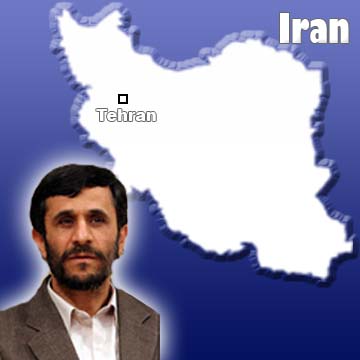
Elections in Iran and Lebanon


The recent Presidential election in Iran has caused a fair amount of political and media frenzy here in the West. It has also brought out a lot of people onto the streets in Tehran. And good luck to them. People's right to protest should be supported everywhere and if they can bring about some liberalisation of the regime even better. However we should be careful of believing everything the opposition claims.

In the first place all the candidates were “official” candidates in that only candidates approved by the establishment get to run. Real opposition to the Islamic Republic is not allowed. In the second place it is very difficult to get an informed feel for what happened during the election and what is happening now. I don't speak Farsi and wouldn't recognize a Persian word if I saw one. Nor I suspect do the overwhelming majority of Western journalists and so-called experts now pontificating about Iranian public opinion. They all seem to be based in the capital, Tehran and rely on interpreters or on English speaking Iranians. Since by all accounts the driving force behind the main opposition candidate, Mousavi, is the richer and better educated urban voters, then it is not surprising that most of our information comes from opposition sources.

The articles that have been written about the elections have not helped much either. While Moussavi did attract large turnouts of supporters, so did Ahmadinejad. Opinion polling is not an exact science anywhere and least of all in Iran. There is not much of a case that can be proved by reliance on opinion polls. Nevertheless polls that showed Mousavi neck and neck were counterbalanced by polls that showed Ahmadinejad winning by more or less the official margin. And it is a fact that Ahmadinejad did win the 2004 election, defeating Rafsanjani in the run-off election by winning 62% of the vote. It is also worthy of note that in all presidential elections in Iran the sitting president has always won a second term.

Thus it was always a likely outcome that Ahmadinejad would win the election. This does not of course mean that there was no fraud. We simply do not know. And it is really a matter for the Iranians. What is most interesting about the elections is that yet again Western politicians and commentators feel obliged to categorise or rather stereotype the candidates as either “hardline” or “reformist”, which usually goes with “pro-western”. This is nearly always done on the basis of no knowledge whatsoever about the country or the candidates. In Iran for example the attempt to portray Mousavi as some kind of pro-western liberal reformer is so wide of the mark that it beggars belief that it is even tried. This is the same Mousavi who was a very hardline, repressive and anti-western Prime Minister from 1981-1989. The Mousavi campaign is also very closely supported by former President Rafsanjani. In terms of what their campaign was proposing for Iran, here is the view of M K Bhadrakumar, former Indian dimpomat:
“If we are to leave out the largely inconsequential “Gucci crowd” of north Tehran, who no doubt imparted a lot of color, verve and mirth to Mousavi’s campaign, the hardcore of his political platform comprised powerful vested interests who were making a last-ditch attempt to grab power from the Khamenei-led regime. On the one hand, these interest groups were severely opposed to the economic policies under Ahmadinejad, which threatened their control of key sectors such as foreign trade, private education and agriculture.
For those who do not know Iran better, suffice to say that the Rafsanjani family clan owns vast financial empires in Iran, including foreign trade, vast landholdings and the largest network of private universities in Iran. Known as Azad there are 300 branches spread over the country, they are not only money-spinners but could also press into Mousavi’s election campaign an active cadre of student activists numbering some 3 million.”
It is interesting to note that Bhadrakumar's article which appeared in the Online edition of Asia Times, is entitled Rafsanjani's gambit backfires.

It would seem then that Mousavi's great reforms are to make it easier for people like Rafsanjani to make even more money. The inclusion of all these students would also explain the active use of the new media by the Mousavi campaign and their access to the English speaking airwaves. Of course the support of the liberal urban intelligentsia does not necessarily make for an election victory – see John Kerry in 2004. Given that the Rafsanjani clan is widely regarded in Iran as corrupt business dealers and that Ahmadinejad decisively defeated Rafsanjani in 2005, it should not really be a surprise that Mousavi's close association with Rafsanjani would prove to be electorally unpopular.

Once again it must be emphasized that we do not know what actually happened during the election in Iran. Though the protests against the result have continued at least in Tehran. Once again it is difficult to get an accurate picture of what is happening in the provinces. The size and demands of the protests may indicate that we are moving from an internal power struggle within the Islamic regime - Mousavi/Rafsanjani against Ahmadinejad/Kamenei - to a broader struggle for changes to the regime. We just do not know at the moment. However that has never stopped the Western intelligentsia from seeking to interfere. At least it looks like there will be no military attack from the West on Iran. Just the Machiavellian arts of propaganda.

In Lebanon on the other hand we do know what happened in their recent parliamentary elections. Once again the West found it imperative to stereotype the leading coalitions as either pro-western or in this case pro-Iranian. And surprise, surprise the supposedly pro-Iranian bloc, the March 8 Alliance, which included Hezbollah won a clear majority of the popular vote, 55% to the 45% for the pro-western March 14 Alliance. Not that you would know this from the mainstream media. For, due to the quaintness, or profoundly undemocratic nature of the Lebanese electoral system, the March 14 Alliance, which remember lost the popular vote, won 71 of the 128 seats in the Parliament. Where were the cries of outrage at this blatant subversion of the popular will? Conspicuous by their absence. Instead we in the West were treated to a chorus of reports on how successful the pro-western bloc had been and how Hezbollah had suffered a major reverse.

Lebanon remains a country dominated by religious affiliation. The current deal allocates half the Parliamentary seats to Christians and the other half to Muslims. Unfortunately from a democratic perspective all the evidence shows that only about 35-40% of the population is Christian. Within in the Christian community each sect is allocated its own seat or seats. Thus the Protestants have one seat allocated to them, while the Armenian Orthodox get five seats and the Greek Catholics get eight seats. The big losers in this game are the Shia Muslims who by most accounts represent nearly 40% of the population. Historically the poorest segment of Lebanese society, the Shia are allocated a mere 27 seats in Parliament, approximately 21% of the seats. Now it is a matter for the Lebanese to determine their own electoral system. I just don't see why our leaders in the West should be so loud in their praise for a system that so blatantly discriminates against the largest group in the country.

A closer look at the make-up of the March 14 Alliance also calls into question just to what extent they are in fact liberals worthy of our support. The leading component is the main Sunni party the Future Party. It's current leader is Saad Hariri who is the son of the previous leader Rafik Hariri. This party is also closely allied to Saudi Arabia, not exactly a beacon of civil liberties. Another key party is the main Druze party which goes by the exotic name of Progressive Socialist Party. Its leader is Walid Jumblatt and its previous leader – yes you've guessed, his father, Kemal Jumblatt. The use of the word Socialist in the party's name seems to owe more to the father's love of Orwell than to any belief in anything remotely socialist. Unless Tony Blair still counts as a socialist. The other mainstay of the March 14 Alliance are the two blocs of Maronite Christians. Both are very right wing and one is modelled on the Falangists of Franco's Spain. Again not exactly what you would expect from a pro-western party.

And yet that is the norm in the Middle East. The so-called moderates and our friends in that region all seem to be corrupt dynastic dictatorships – Egypt, Saudi Arabia, Jordan and the various mini states in the Gulf. The plural nature of Lebanon has prevented a similar dictatorship from emerging, though not without successive attempts by the Maronite minority. However the dynastic principle is still alive and well. Throughout the region the only parties that seem to be free from this dynastic corruption are Hezbollah in the Lebanon and Hamas in Palestine. They of course, like Iran itself are regarded as hors jeu because they are unwilling to accept their allocated role as Western stooges.

Monday, 15 June 2009

What's Left?

Some thoughts on the recent Euro elections. Which you may have missed as they were about as exciting as a Gordon Brown relaunch. Apart from the flurry of attention given to the election of two BNP MEPs, the main media story was the success of the centre right and the collapse of the centre left vote throughout Europe. A rather superficial attempt at conveying the meaning of the election outcomes. While the traditional left of centre parties did on the whole do very poorly, the centre right parties did not in fact do very well. Across Europe as a whole, the main right wing parties lost votes, though not nearly as badly as the mainstream left which saw its vote evaporate. New Labour in particular did very badly, polling less than UKIP. The French socialists and the German SPD also registered significant loss of votes. However, whatever spin you put on it the results do not amount to a ringing endorsement of the mainstream right. In fact just about all the main political groupings lost votes. Only the Greens and their allies in the European Free Alliance, who include the SNP and Plaid Cymry, gained slightly, up from 5.5% to 7.2%. Not much to write home about either. Clearly though, the biggest losers were the left, both the traditional parties and the radical left.

What has caused this collapse of the left? In the first place it may be long overdue to revisit the language used. Referring to New Labour or the current French Socialist Party as left wing is pretty much meaningless. Along with the German Social Democrats they long ago gave up on traditional left wing causes to become standard bearers of neo-liberalism. At least in Italy they don't even pretend. The recently formed party created by the former left wing parties is simply the Democratic Party. While it is true that our continental brothers and sisters have managed to retain better funded and more generous health and welfare provision than in the UK, none have put forward any kind of alternative economic and social programme to the dominant neo-liberal consensus. To paraphrase a slogan from an earlier generation the current so-called left offers capitalism with a human face. Though in relation to immigration, asylum and the treatment of minorities, especially Muslim minorities, there is precious little evidence of much in the way of humanity. The left often seems intent on proving itself to be even more illiberal than the right on many issues.

While this approach has clearly brought electoral success during economic good times, the recent downturn and current crisis has badly exposed the left. Without a credible alternative strategy for combating the crisis voters have to a greater or lesser extent just deserted the traditional left. Though the right have not convinced many, the left has been exposed as the emperor with no clothes, or perhaps more accurately with no clothes of his or her own.

As for the radical left or the Group of European United Left and the Nordic Green Alliance, they have failed to make much of an impact anywhere, with the possible exception of Germany where they won 7.5% of the vote, which is still not a lot. As this grouping includes Sinn Feinn it would seem to be more a group of convenience than a genuine meeting of minds on the way forward. Europe is full of miniscule left wing parties most of which never win enough votes to gain seats in any Parliament anywhere. It is not at all clear if the current crisis will bring enough of them together to develop a common programme which can offer a credible and electorally popular alternative to not just the right but the traditional left.

Faced with the catastrophic failure of the current neo-liberal consensus, which in addition to bringing us to the verge of economic collapse, has also brought us everlasting wars of occupation and a constant erosion of our civil liberties, you would expect there to be an opening for a left wing alternative. The current leaders of the discredited traditional left parties are clearly unable and probably unwilling to embark on any kind of fundamental rethink. Are there enough members of these parties to provide a new generation of leaders? One open to real alternatives? The radical left parties have so far never achieved any kind of electoral success. Can they change? If not, what's left? God knows!

Wednesday, 10 June 2009

In and Out of Liechtenstein

Liechtenstein is only about an hour and a half's drive from Zürich and as we had never been to Liechtenstein before we took the opportunity during out last visit to add another country to our list. With a population of just over 35,000, Liechtenstein is the sixth smallest country in the world. From Switzerland you just drive over the river Rhine. If you are not very observant you are not aware that you are in another country. There are no border controls or customs as Liechtenstein is part of the Swiss custom zone, uses the Swiss franc and both are part of the European Economic Area. Once over the border we headed up straight away, climbing a zigzagging road and then under a tunnel to reach a hidden valley with Malbrun as its main village/resort.
Malbrun is right at the end of the road and from here you can walk or ski over the mountains into Austria. It is a typical Alpine village with lots of wooden buildings, mainly chalets and some hotels. Though there was lots of snow still lying on the hillsides, the skiing season was over and the place had a real empty feel about it. The summer season for walkers and mountain bikers had not yet started so everywhere seemed closed. Still it was a lovely, clear and sunny day, so we wandered about a bit and looked into the little chapel high above the village and then headed off again to find a café.
On the way down we passed a charming church with the traditional onion dome in the little village of Triesenberg, then found a lovely café with a fine balcony and we spent a relaxing time high above the Rhine looking over and down into Switzerland. All the while enjoying the coffee and torte.

We continued down the mountains and soon reached Vaduz the small capital of Liechtenstein. Vaduz is very easy to walk about and the central area is full of public sculptures, museums and galleries. Not that we had time to visit any.
Liechtenstein is clearly a very wealthy place and Vaduz has its fair share of banks and other investment institutions. Pretty well supplied with fancy and expensive shops as well. Liechtenstein also seems to share the Swiss love of cows in public spaces.
Vaduz is also the home to Liechtenstein's own Parliament. There are only 25 elected members, so it is not surprising that it is rather simple wooden building, more like a warehouse than a Parliament – not a patch on our wonderful Parliament building in Edinburgh.
Liechtenstein has its own Monarchy, well Princes actually, as along with Wales, Liechtenstein is a Principality. The ruling family is the House of Liechtenstein and the Principality takes its name from the dynasty. The current Prince is Hans-Adam 11 and he apparently still has quite significant political powers. The princely family live in a very imposing castle which towers above Vaduz and is not normally open to the public.

From Vaduz we headed off for Austria and in just over half an hour we had crossed the border, a real one this time with guards and customs. Not long from the border you come to Feldkirch a charming little county town. Feldkirch has a beautiful medieval centre though we only had a little time to wander about admiring the traditional buildings and shops before finding an Italian restaurant for much needed food.
Unfortunately it had started to rain by the time we reached Feldkirch though that did not stop one of our number from enjoying himself. His love of rain must come from his Scottish heritage!

Leaving Feldkirch we drove back into Liechtenstein and in next to no time we were in and out again and over the Rhine, back in Switzerland, heading home to Zürich.