Sunday, 13 December 2009

Yet Another Afghan Surge

So Obama finally made up his mind. The Commander in Chief has decided and lo! the whole world trembles. Or not. Not much trembling in Afghanistan apparently. As usual the UK is right onside with our very own mini surge of troops. And despite all the talk and briefings nobody seems to be much wiser as to what all these surges are supposed to achieve, let alone why we in the UK should be in Afghanistan anyway.

For there is a contradiction at the heart of the newly announced strategy. On the one hand we are assured that we need to be in Afghanistan in order to protect us in the UK from terrorist actions. Yet at the same time we are assured that we are only going to stay there for a short time and that our surge depends on the good behaviour of the current Afghan government. Now somebody is clearly lying here. If there is a real threat to our safety in the UK that requires us to occupy the country, then we stay there for as long as it takes to get rid of the threat. You don’t state that you’re going to start the pull out in a year’s time. And you most definitely do not make our presence conditional on what the Afghan government does. After all it is supposed to be our security that is at risk. What if the threat has not been eradicated in a year’s time? Do our troops stay on - for ever?

At this moment it is not at all clear just what the end game from the UK/USA perspective is. One thing for sure is that all this concern about the Afghan government is a mere smokescreen. Either we are in Afghanistan for a long, long time or we are already preparing the ground for our withdrawal. In which case the stuff about holding Hamid Karzai and his corrupt government to account becomes the perfect excuse for our pull-out. Look, we did everything we could, but these son-of-a-bitches out there just couldn’t get their act together, so we’re offski.

When you take into account the various crises facing the world - the continuing effects of the financial meltdown, global warming, the rise of Israeli fundamentalism, to name a few - the justification for wasting billions of pounds and dollars supporting a war in Afghanistan is exposed as threadbare. While there seems to be growing instability in Pakistan and many terrorist attacks in the UK seem to have a Pakistani connection, we are stuck militarily in Afghanistan. As the USA National Security Advisor Jim Jones was quoted as saying there may be only less than 100 Al Qaeda fighters in the whole of Afghanistan. What we have in Afghanistan is a civil war and it escapes me completely why I should be funding one side of a civil war and why UK soldiers should be getting killed to support one side of a civil war. It is only arrogance of the worst kind that allows some people in the West to think they have the right to violently decide the future of other peoples half way round the globe. The Taleban are probably not a very nice bunch of people, but that is not a reason for us to go around killing and maiming tens if not hundreds of thousands of Afghan civilians.

Mullah Mohammed Omar, the Taleban leader, has already issued a long message to the world, pre-empting Mr. Obama’s speech. It includes the following section which makes clear that the root cause of the violence is the occupation:

Afghanistan is our home and nobody negotiates with anyone about the ownership of their home and about how to share sovereignty and management responsibilities of their home. Nobody will give up their right to be the owner of their home and nobody will wilfully lose their authority in their own home. The foreigners have taken over the home of the Afghans by force and cruelty. If they want a solution to the problem, they should first end their occupation of Afghanistan.

Nick Mills, Associate professor of journalism at Boston University, in an article in the Huffington Post, neatly summarizes the key problem facing our troops:

... the great conundrum of our efforts in Afghanistan is, the more we try to fight for the Afghans, the more we seem to fight against them. There are ways to help the Afghans, but occupying their country with an army isn’t one of them.

Let’s hope we do begin to withdraw soon.

For a fascinating comparison of the rhetoric used by Bush and Obama to justify the surge - basically the same - see this article by the great Glenn Greenwald.

Tom Engelhart has a fine exposė of the figures behind Obama’s surge - there are in fact nine surges in all. You can find this report here.

Wednesday, 9 December 2009

December

With the arrival of December I always feel that winter has begun. This is the month of the winter solstice and this year the shortest day will be on the 21st. The weather has definitely become colder, though so far there has been no hard frost, let alone any snow. Still there is time yet for a white Christmas. Not that snow at Christmas is a regular occurrence over here. Quite the opposite, at least over the last few decades. Snow or not, December is one of my favourite months. The main reason for this of course is that December is the month for Christmas, Hogmany and holidays.


The Christmas holidays was always a much looked forward-to time for me. Any time off school was good, but these were special. Not just Christmas itself, but all the trappings associated with this period. Christmas lights would go up in the main streets in the town. All the shop windows would be brightly lit up with Christmas themes. At home we would decorate the living room with ribbons, and all kinds of paper decorations. A real tree would emerge by the window, ready to be covered in lights and decorative hangings. My mum was very skilled at making her own decorations, especially to put on the table. Moss, cones, holly leaves, cotton wool and ribbon would be quickly assembled into colourful settings. Here is window display from this year in Broughty Ferry.

However the most excitement came from playing outside. During the 1950s children were left pretty much alone to play in the local parks and even on the streets. As winters were definitely much colder then, snow was a common occurrence. We would have snowball fights and build snowmen here, there and everywhere. Sledging was another grand sport. Everyone had their own sledge. Mine was a home made effort, constructed by my Dad. We would tow the thing up the nearest hill or slope and push off from the top. With any luck you were still on the sledge when it reached the bottom. As St. Andrews had not then embarked upon its later housing expansion, little hills were easy to get to. Another favourite was ice skating. One of the local parks was commonly known as the Skate park. The main grass area was formed by a slight hollow and every winter this was flooded with water, which would soon turn to ice in the cold weather. Our seasonal outdoor ice rink was tremendously popular with all ages. I loved skating, though I was never particularly good. I usually managed to stay upright, probably because I never tried anything too ambitious or dangerous. I don’t think I’ve ever been skating since those days. Another local pond, known as the Duck pond would also freeze over. This pond was located just outside the town by the Lade Braes, and was originally a reservoir for the nearby water powered mill. As this was a year round pond and quite deep, it was more difficult to freeze over, and was always regarded as a bit of a dangerous place. If it did fully freeze over, it was used for curling.


Christmas Day was naturally the highlight of the season, and I was always very excited by the prospect of lots of toys and other goodies appearing as if by magic on Christmas morning. We followed the traditional custom of hanging socks on the mantelpiece for our gifts. They could only take a few sweets and oranges, the main presents were laid about the room, over chairs and by the Christmas tree. It was like waking up to a magic wonderland. Once I had calmed down a bit the next highlight was the Christmas lunch. In our family the tradition was that we entertained all our relatives on Christmas Day, while my Dad’s brother, uncle Sydney and his family did the honours on New Year’s Day. This meant there was always a bit of an edge to the meals as neither my mother nor aunt Rosie wanted to be outdone by the other. Both meals were in fact very, very good. My mother was an excellent cook, who apparently effortlessly conjured up mouth watering feasts of turkey with all the trimmings and accompaniments, followed by seemingly countless desserts. The piėce de résistance was the Christmas pudding. This was a traditional steamed fruit pudding with several silver sixpenny pieces hidden inside. The pudding was gobbled down as much to find the much prized sliver sixpence as for its nutritional goodness. Drink was not something that our family indulged in. Both my parents were in effect tee-total. Though at festive occasions they were know to sip a little glass of sherry or in Dad’s case a little port. With this we would have some Christmas cake, another of my mother’s specialities. This was a very rich fruit cake, usually soaked in sherry or brandy, which mother had started to prepare in October. The richness of the ingredients meant that this long time was need for the cake to fully mature. After all this indulgence various games would be played - card games, snakes and ladders or monopoly. In later years of course the television came to provide the main source of entertainment. Here are the Rutherfords at one of these long ago Christmasses.

Though this post is about December I feel it has to include the New Year celebrations, as in Scotland the main activities occurred or at least started on the 31st December. Traditionally Hogmanay was the main winter celebration in Scotland. Though our family always made a great thing of Christmas Day, the 25th did not become an official public holiday in Scotland it seems until 1958. Partly due to the religious sensitivities of the dominant protestant churches in Scotland, Christmas Day was regarded as both not a significant Christian day of worship and too much associated with Roman Catholics. Well into the 1970s and 1980s you could still hear or read about some small protestant sect raging against the perfidy of Christmas.


Anyway, after this brief historical digression, to return to Hogmanay. Nobody really knows the origin of the word - old French, Flemish and Norse have been suggested as possibilities - but who cares. Hogmanay is the time for a right good party and is usually associated with dancing, much noise and even more booze. A good traditional Scottish mix. Winter festivals are as old as mankind and the Scottish Hogmanay does seem to have much in common with the Ancient Roman festival of Saturnalia which was apparently a period of unrestrained licence and revelry. Plus ça change and all that. I don’t have many early recollections of Hogmanay. But later on into the 1960s Hogmanay became a big event for our family. Or at least for my parents. One of our neighbours, the Clarke’s, would organise a veritable feast for early in the evening. All their friends and neighbours would come. Though television was now common, the party would still be entertained by impromptu songs by fellow guests. After the bells had brought in the New Year, the party could expect the regular arrival of new guests as one of the main traditions was first footing. It was considered lucky to be the first person to visit a house after the midnight bells. The guest traditionally would bring a lump of coal or cake or salt. A bottle of whisky was an almost obligatory addition. Drinks and good wishes would be exchanged and after a decent while, the first footers would move on to celebrate/raise havoc somewhere else.


These traditions, especially the first footing were very much alive well into the 1970s at least. Kathleen and I would regularly be out and about visiting friends and acquaintances. Nowadays there seems to be much less of this aspect to Hogmanay. Parties are still very common, and most people who go out will go to a party in the house of a friend. The other innovation is the big communal street parties. Most towns have one, but the biggest and most famous is Edinburgh’s. I’m too old and frail to indulge in such riotous enjoyment. In fact Hogmanay is probably the part of winter that I least enjoy. We have rarely found a satisfactory way of celebrating the New Year. Some of our friends go away for this time and bring in the New Year in a hotel either in Scotland or in some warm country. Must say that celebrating Hogmanay in the Bahamas does have its attractions.


For the Rutherford family December is a particularly happy month. One of my great grandmothers, Catherine Rodger was born on Christmas Day in the parish of Carnbee in 1847. She would go on to marry James Rutherford. December is also the month in which my sister, Pat, was married. Her wedding was on Boxing Day, and I can still remember the reception afterwards. Two birthdays in particular make December a special month. My wife, Kathleen was born on 30th December and will soon celebrate her sixtieth birthday. And of course, our first daughter, Emma, was born on 29th December. At that time we were living in Johnstone, a small town outside Glasgow and Emma came into the world in the Maternity Hospital in Paisley. She can therefore claim to be a Paisley Buddie, though I am not sure if she wants this particular accolade. Anyway when she was but six months old we moved to St. Andrews and she grew up there. So she is really a St. Andrean after all. Our first year there was spent in a basement flat right beside the 18th hole of the famous Old Course, and this was where she learned to walk, which she managed to do on her own by the time she was just nine months old. Always on the go is our Emma - right from an early age always keen to be out and about. Some things never change!


Having a birthday so close to Christmas can be a bit of a downer for some. Kathleen has always felt that she missed out on her birthday. Emma on the other hand I think quite liked the idea of two parties and two lots of presents one after the other. You can never get too much of a good thing. Anyway here she is about to plunge into a birthday cake.

If you want a gemstone for December you are spoiled for choice. If you want something bright and warm, then the ruby can be yours. This is favoured by the Ayurvedic tradition among others and symbolises everlasting love. Most traditions however favour something cooler, either turquoise or the blue topaz. Turquoise is meant to represent prosperity, success, happiness and good fortune, so would seem a good choice. However if you want something which symbolises love and fidelity, then blue topaz is for you.

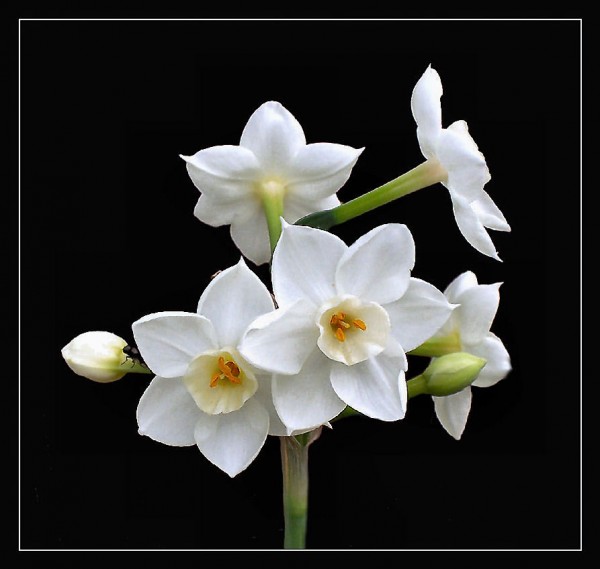
Less of a choice when it comes to December’s flower. By common consent this is the Narcissus. Any colour may do, but the most usual seems to be the paperwhite narcissus which stands for respect, modesty and faithfulness. A gift of narcissus means that the sender wants you to remain as sweet as you are. How romantic, and as good a way as any to end this post. A happy December to one and all.


Saturday, 5 December 2009

The Rose of Sebastopol

The Rose of Sebastopol by Katherine McMahon was the reading group’s book of the month for December. The Rose of the title is Rosa Barr a young woman who is determined to make a career in medicine and somehow manages to get herself to the Crimea to work as a nurse during the infamous Crimean War. However, though a crucial person in the novel, Rose is not the main character and the novel is not primarily about the war. Rather the novel is centred on another young woman - Mariella Lingwood, Rosa’s cousin. For the novel is almost a coming of age tale. We see Mariella grow from a sheltered and innocent young girl to a woman who has painfully and stumblingly become aware of the sometimes cruel vicissitudes of life and love.


The starting point for the novel is the discovery by Mariella that Rosa is lost somewhere in the Crimea during the war. Mariella is pressed upon to go in seach of her cousin and the novel is Mariella’s first person account of this adventure. From her account we learn not only about Mariella and Rosa and their families, but also about the controversies and developments in medicine and nursing in the 1840s and 1850s. This of course covers the period in which women began to strive with some success, to break out of their corsets, so to speak, and to break into the make dominated world of the professions. The novel has much to say about these changes and how they were perceived by polite society. Mariella herself is somewhat ambivalent about these changes and only becomes reluctantly involved through the incessant prodding of Rosa. Mariella is content to pass her life within the traditional confines open to women in 19th century Britain. She is desperate to marry her beloved Henry and have lots of children. Rosa on the other hand is made of much sterner stuff and is equally desperate to enter the world of work and independence.


Though the novel is not primarily about the war, once Mariella reaches the Crimea, then the war does become the backdrop to everything that happens. And Mariella does not spare us any of the horrors and suffering of that war. Though not herself on the front line, she, and we, learn much about the brutality and the stupidity of the war from her encounters with wounded soldiers. Though there is much bravery, this picture of the war painted here is not a pretty one.


The worlds of medicine and the war provide the background to the novel, but the heart of the story is Mariella’s own growing self-awareness. And this part of the novel reads as a love story. Or perhaps more accurately at least three love stories. We begin with Mariella and Henry. This is a very formal and traditional love affair, with much affection, not a lot of love and zero passion. Once in the Crimea Mariella slowly and gradually begins to fall in love with Max Stukely, Rosa’s half brother and an officer in the Crimea. This affair is full of passion and is a stark contrast to the insipid affair between Mariella and Henry. The other love story is the least developed and that is Rosa’s love for Mariella. That Rosa has a not so secret passion for Mariella is obvious to all, except Mariella herself. It is one of the weaknesses of the novel that this relationship is not fully developed and abruptly terminated with the death of Rosa at the end of the novel.


This is a well written novel and successfully deals with some very interesting aspects of our past - the changes in medicine, the changing role of women and the Crimean War. However in telling this tale, the novel goes back and forth both in time and in place. Thus we start in Italy in 1855, then in the next chapter we are in London in 1840. Subsequently we switch back and forth to Derbyshire in 1844, back to London then to Italy, back to London and on to the Crimea in 1856. Not at all sure what all this to-ing and fro-ing adds to the novel. A bit of mystery and confusion. I kept expecting that something revelatory would emerge, but alas nothing did. I also feel that the whole does not really hang together that well. It is almost as if the author started writing one novel which has Henry as one of the key characters and then half way through changed to one in which Henry barely features and Max suddenly becomes the male hero. Mariella herself is not the most likable or attractive of heroines. Most of the time she is very conventional, narrow-minded and blind to feelings of others. As a result she misjudges just about everyone. Still, on the whole an enjoyable read.


Wednesday, 2 December 2009

What is the point of local government?

I ask this in light of the recent reshuffle of the Scottish government. Fiona Hyslop, the Education Minister was effectively forced from office by the combined threats from the opposition parties. Her crime? It is claimed that she has failed to deliver on key SNP manifesto pledges. The SNP had made a commitment to reduce class sizes in Primary 1, 2 and 3 to eighteen pupils or less and to maintain teacher numbers in the face of falling school rolls to cut class sizes. Now this is a laudable aim, but the responsibility for delivering this commitment rests not directly with the government, but with local councils. It is the local councils that have full responsibility for nursery, primary and secondary schools. We have 32 of them each with their own Director of Education. Each council can of course set its own priorities and reducing class sizes may not be one of them.


But do we want 32 mini school systems in Scotland? It would seem not. After all most of the key policy decisions are already taken at the national level by the government and parliament. The starting and finishing ages for schooling is set by the government, as is the exam system. Guidance on the curriculum and class sizes is issued at the national level and the qualifications and pay for teachers is negotiated on a Scotland wide basis. So what does each local council actually do? They run the system, but have little or no say in the key decisions. The money to pay for all this comes primarily from the government. Local councils only raise about 20% of their budget, the rest comes from the government in Edinburgh. Yet the government does not have direct control over how this money is spent. However the government is still held responsible when things go wrong.


The same applies not just to education, but to Social Work and the Health Service. In all cases the key decisions regarding policy and conditions of service are taken at the national level. Hence the question posed at the beginning - What is the purpose of local government? To get an answer it seems to me that we need to ask another question. This would be to ask what the people of Scotland want to be the same wherever they live in the country and what they would be happy and willing to see different. I suspect that in relation to education, social work and the health service the overwhelming majority of Scots would want the same standards and level of provision to apply everywhere throughout Scotland. Specifically in relation to education, how many people actively want to see children start school at age five in Glasgow, but age six in Aberdeen and age seven in Orkney? Or how many would welcome councils having the right to go back to class sizes of 40+? Or to deciding that teachers need not have a teaching qualification in order to teach?


To a large extent most people already feel that it is the case that we have a national education system with the same standards and level of provision everywhere. That is why there is such a media and political storm whenever there is a failure to meet these standards or levels in any one part of the country. And it is this demand that the government take responsibility that lay behind the demand for Fiona Hyslop to resign or be sacked.


However most of our national politicians do not want to recognise the obvious - that if they want government ministers to be fully responsible and accountable then we need to take these services away from local councils and set up nationally run bodies to run them. Only this way can government be sure that the money it allocates to education is actually spent on education and not on some local council’s pet project of the day.


I myself have always felt that national politicians by and large like the present set up as they can always blame local councils when things go wrong. And everyone needs to have someone else to blame. So I was pleasantly surprised when I read that the government is to look again at the need for local councils to run education and care for the elderly. Some leading members of the other political parties are known to be in favour of this move. So I can only hope that this idea is seriously considered and does not become a political football.

Friday, 27 November 2009

The White Ribbon - Das Weisse Band

The White Ribbon is the latest film by Austrian director Michael Haneke. It is set somewhere in rural northern Germany in the year before the outbreak of the First World War. Ostensibly the film is about the strange and malicious happenings that occur during that year - the local doctor is thrown from his horse, a woman worker dies in the sawmill, the Baron’s son is abducted and beaten, a boy with Down’s syndrome is attacked and almost blinded. Are these and other happenings just accidents or there is something more disturbing afoot? The film starts as if it might be a who done it mystery. And towards the end it almost builds up to a mystery solving exposé. But nothing is really revealed, for these happenings are merely the fixed points in what is essentially a study of an inward-looking and repressed community.


Our view of this rural community comes from the local teacher, who, now an old man, looks back at the events of that year. He does this in part by a voiceover narration and in part by his presence in the film as the young teacher. As the teacher much of his contact is with the children of the village. And it is the children who are the stars of the film. Both in terms of the outstanding performances by the young actors and in terms of their pivotal role in the film. Most of the unusual happenings involve children in one way or other. They are either the protagonists or they are the ones who suffer the consequences.


And the consequences tend to be pretty brutal. This is a portrait of a repressed and fearful community in which both physical and psychological punishment is inflicted on those who transgress. In this village sex is shown as something brutal or abusive or as something to be repressed. The white ribbon of the title refers to a ribbon used by the local Pastor. Ostensibly a symbol of purity and innocence, in the film it becomes a symbol of oppression and shame when he forces his teenage son and daughter to wear a white ribbon as a form of punishment.


It is also a deeply conservative and hierarchical society, which is dominated by the Baron and to a lesser extent by the local Lutheran Pastor. Everyone else lives in awe of them. Anyone who challenges their authority is likely to suffer.


The film is shot throughout in black and white which both gives the film an old fashioned look and emphasizes the threatening and foreboding atmosphere which suffuses every scene. Most of the scenes are indoors or in some constrained setting and the film does have a claustrophobic feel about it. There is a sense of not being able to escape, either physically or psychologically. None of the characters are particularly attractive neither in character nor in appearance. Just about everyone has a dour, almost hateful expression. The only two characters who are at all attractive are the young teacher and his fiancee. Significantly, both are from other villages and they are in contrast to the villagers they are mainly seen outdoors.


The cast is pretty much perfect. All unknown to me and probably to most non German audiences. The Pastor is particularly good and one can easily imagine being terrified by his mere presence. The children as already mentioned are excellent and they all have a sort of dull, haunting and slightly frightening look about them. The direction and camera work is a wonder in itself. Haneke likes to hold on to a scene for a long time. For example we see a corridor and the doors at its end. The camera holds this view for what seems like forever and hardly anything happens. Someone enters or leaves or somebody just passes by. We are left wondering, not quite sure what to expect. Just this sense of claustrophobia and surreptitiously eavesdropping and slightly fearful for what we might see.


At the very beginning of the film we hear the voice of the old teacher setting the scene and he suggests that these painful events "could perhaps clarify some things that happened in this country". Knowing what did come next in the 1920s and 30s not just in Germany, but in many, if not most parts of Europe, encourages us to view the film as something more than just a German children’s story - the film’s subtitle in German. For it would be the children of this pre First World War world who would come to full maturity in the 20s and 30s. According to Haneke, the film is about the origin of every type of terrorism, be it of political or religious nature. This is certainly a very powerful film and without a doubt one of the best films I have seen this year. It is a simply riveting and majestic film - a true masterpiece.

Monday, 23 November 2009

St. Andrew's Day


This coming weekend will be one of the highlights of the year in Scotland. Saint Andrew is the patron saint of Scotland and his feast day is celebrated on 30 November. St. Andrew’s Day has over the last two or three decades become an ever more popular day of celebration. When I was a young boy there was not much in the way of official recognition. Everyone knew that St. Andrew was our patron saint, but no great fuss was made and 30 November was just like any other day. It was not a public holiday.

That has all changed and the growing recognition of St. Andrew’s Day as Scotland’s Day has in many ways mirrored the growing self- awareness of Scots. This has led of course to the re-establishment of our own Parliament. And in 2006 the Scottish Parliament designated St. Andrew’s Day as an official bank holiday.

But what has Saint Andrew to do with Scotland? Andrew of course was the brother of Peter and one of the 12 disciples of Jesus. According to writer Michael T R B Turnbull, “Andrew was an agile and hardy Galilean fisherman whose name means ‘Strong’ and who also had good social skills. He brought the first foreigners to meet Jesus and shamed a large crowd of people into sharing their food with the people beside them. Today we might describe him as the Patron Saint of Social Networking!” Good guy to have as your patron saint! How did he get to Scotland though? Well, he didn’t actually get to Scotland, but his relics, or at least some of them, are supposed to have ended up, sometime in the 8th century, at what is now the town of St. Andrews, so named in honour of the saint. There on 5 July 1318 Scotland’s largest cathedral was consecrated in a ceremony before King Robert the Bruce. Alas the cathedral is now a picturesque ruin.

The other legend that associates the saint with Scotland is more military and political in origin. In 832 before one of the many battles between the Scots and their Pictish allies and the invading Saxons, King Angus McFergus had a dream in which Saint Andrew appeared promising victory. On the morning of the battle a great white X shaped cross appeared in the sky and the Scots and Picts took this as a sign of divine support. They went on to win a bloody victory and from that time Saint Andrew and his Saltire Cross were adopted as the national symbols for an emerging Scotland.

Enough of history - what about the celebrations? This year St. Andrew’s Day falls on a Monday and this means that many places have decided to devote the whole weekend to activities and events. There are the usual ceilidhs, family fun activities, concerts of traditional and not so traditional music, street theatre and much else. This weekend will also be the start of the pre-Christmas celebrations and in many places this will be combined with celebrating St. Andrew’s Day. In Dundee for example there is to be a Winter Lights Night. This is advertised as “a visual feast set to mix stunning audiovisual displays and music against a backdrop of street art, performances and storytelling, culminating in a fireworks display.” If you want to get an idea of what is on offer throughout Scotland you can access the official St. Andrew’s Day online guide here.

The town of St. Andrews is one of the places to put on a weekend long programme of events and activities. This includes lighting up the medieval walls of the town with installations themed to reflect different aspects of Scotland’s heritage. There will even be a power kiting festival on the West Sands. On the Monday many famous buildings will be open for free, including the R&A clubhouse. We will certainly be there. For more info about events in St. Andrews their festival brochure can be found here.


What about Scots in the rest of the world? Scots of course have long been a migrant people and have settled in most parts of the world. With them they took their traditions and customs. In places where there was a significant Scottish presence Scottish societies were often started in order to maintain these traditions and to provide help for their fellow countrymen. The world’s first Society of Saint Andrew was formed in Charleston, South Carolina on 30 November 1729. Twenty years later, the Saint Andrew’s Society of Philadelphia was started by 25 Scottish residents to give relief to the poor and the distressed. Two signatories of the Declaration of Independence — James Wilson (a graduate of St Andrews University) and John Witherspoon DD, a native of Paisley and president of Princeton College — were founder members. St. Andrew societies or Caledonian societies can be found all over the world. Some of them will mark the day. For example there is to be a St. Andrew’s Day Banquet and Ball on 28 November, held by the Saint Andrew’s Society of San Francisco. While the New York Caledonian Club is to celebrate St. Andrew’s Day on the 30th. Their website doesn’t give any clue as to what they will actually do. There will also be St. Andrew's Day Balls in Toronto and Paris. Most societies, however, do not seem to celebrate St. Andrews Day in any way. In this they are a bit like we were in Scotland 30 or so years ago. Perhaps in the decades to come Scots and the descendants of Scots throughout the world will use St. Andrew’s Day as an opportunity to celebrate Scotland’s culture and traditions.


Saint Andrew of course is not just the patron saint of Scotland. We are happy that many other countries honour Saint Andrew. He is it seems the patron saint of the Ukraine, Russia, Romania and Greece. He is also the patron saint of the town of Amalfi in Italy, where there is a beautiful cathedral dedicated to the saint. We have been fortunate enough to have visited this lovely town and its cathedral. Andrew was also apparently the patron saint of the former kingdom of Prussia. Not sure to what extent St. Andrew’s Day is celebrated in any of these countries or places.


Anyway, to all Scots or would be Scots all over the world and to all people who share Saint Andrew as their patron saint a happy St. Andrew’s Day to one and all.

Sunday, 22 November 2009

Who's Afraid of the EU?

Lots of people judging by the reaction to the recent developments in the EU, in particular the appointment of the new President of the European Council and the new High Representative for Foreign Affairs and Security Policy. Not only are some people and some media outlets hostile to the whole European Union set up, they seem quite happy to tell lies about it. The Daily Mail for example nearly always refers to one of the new posts as President of the EU. Friday’s editorial in the Mail talks about “EU stitch-up” and goes on to describe the decision as “the final act of the squalidly anti-democratic Brussels farce.” Nearer to home a fellow Dundee blogger has a post about our “New Masters” and again refers to Van Rompuy as the President of Europe.


Now these are just two examples, but they accurately reflect the way many people think about the EU. In particular many people accuse the EU of being undemocratic or even anti-democratic. This is a pretty absurd accusation. Now if the newly appointed President was to be the President of the EU as a whole then the charge might have some validity. But of course this is not the case. M. Van Rompuy will be the President only of the European Council. This is but one of the five main bodies that make up the EU. It is not even one of the key decision making bodies. These are the European Parliament and the Council of Ministers. Neither of these two bodies are significantly affected by the Lisbon Treaty. Not only does the European Council not have any formal executive or legislative competencies, the new President of this Council doesn’t even have a vote. Nevertheless we are supposed to be frightened about M. Van Rompuy and what he might do to us all.


What does the European Council do? The Council is where the heads of government of the 27 member states meet together. It usually meets about four times a year and its main role is to define the EU's policy agenda and to settle issues outstanding from discussions at a lower level. And what about the new President - M. Herman Van Romuy - what is his role in all this. The President's work will largely be administrative, responsible for coordinating the work of the European Council, hosting its meetings and reporting its activities to the European Parliament after each meeting and at the beginning and end of his term. Additionally, the President will provide external representation to the Union.


So the European Council which is the body which represents the national governments within the EU has decided to appoint someone as their non-executive, non-voting President for the next two and a half years and we are told by some people that this is an affront to democracy! The European Council has always had a President. This post just happens to change every six months and there was never any election. Just buggins turn. The national governments think that by creating this new post they can be more effective and we are to believe that this threatens democracy! What do the opponents of this want? An EU wide popular election? How would that go down with the various national governments? I can just imagine how outraged the likes of the Daily Mail would be at this. A democratically elected President with all the additional legitimacy that he or she would have through a popular election would pose a much greater threat to the sovereignty of national governments. Now the Daily Mail and others who oppose the current set up know this or else they are complete fools.


Much the same applies to the other post, that of the HIgh Representative for Foreign Affairs and Security Policy. This post has been created in order to ensure greater coordination and consistency in EU foreign policy. Though a new post it replaces two previous posts, that of the High Representative for Common Foreign and Security Policy and that of the European Commissioner for External Relations and European Neighbourhood Policy. As most critics of the EU complain about its bloated bureaucracy, one would have thought that this measure by reducing the number of officials would be welcomed by all. Not so. Once again we are told that this new post threatens the independence of our own foreign policy. This is again not so, as the Lisbon Treaty does not change the key elements of the EU’s foreign policy procedures. Namely that the High Representative can only represent the Union in matters where there is an agreed policy between all member states. And such agreement in nearly all cases relating to foreign policy has to by by unanimity. So where all 27 member states have the same position on a particular issue, and only then, they have agreed that Baroness Ashton can represent them. Big deal!


Now it is true that the two people appointed to these posts, the Belgian-British duo, Herman Van Rompuy and Baroness Ashton, are hardly household names, even in their respective countries, let alone the EU as a whole. At least Van Rompuy is an active politician - he is currently Prime Minister of Belgium. I would have thought that this is a good thing and much better than some of the retired former political leaders that have been promoted by some. There may well be some questions about the suitability of Baroness Ashton for her post, as she has very limited diplomatic experience. Time will tell how effective she is in her new role.


However all political appointments are to some extent controversial. And in this case most critics are just using this as yet another opportunity to vent their hostility to the whole European Union project. And to show of their ignorance.